By Leonnel Mhuka
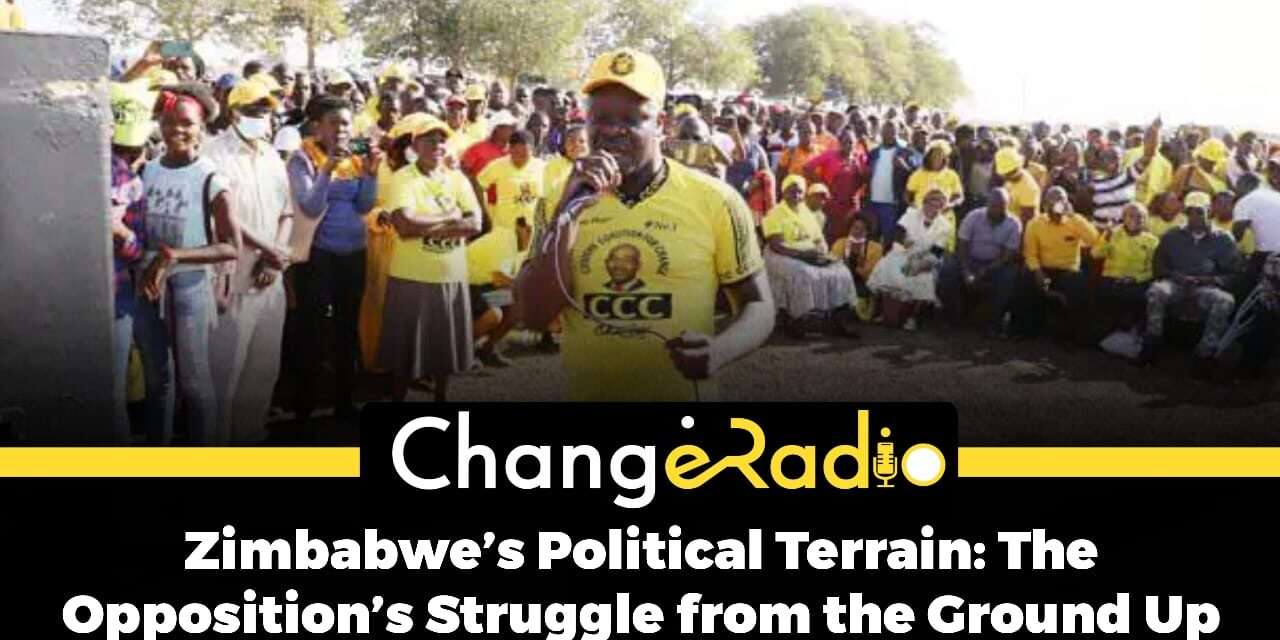
Zimbabwe’s political journey has long been defined by contested elections, deep-seated repression, and a persistent gap between citizens’ needs and those in power. Opposition leader Hon Amos Chibaya’s recent remarks on Change Radio capture the frustration, resilience, and aspirations of many Zimbabweans. Speaking candidly, the former MP traced his journey from community organizer to parliamentarian, not for personal ambition, but out of necessity. His story echoes a broader political truth, that ordinary citizens are central to Zimbabwe’s democratic struggle.
Speaking to Change Radio on Fridy, Hon Amos Chibaya passionately argued that “politics is in the community, the street, the village, the farm.” It’s a powerful reminder that democracy does not begin in Parliament, or any office it begins with people. He views grassroots mobilization as the foundation of political change. Community leaders, activists, and ordinary citizens carry the potential to hold the powerful accountable, demand better services, and protect their votes.
This vision isn’t just idealism. Across Africa, successful democratic movements—like those in Malawi or Zambia—have been fueled by grassroots organizing. Yet in Zimbabwe, organizing at the local level is dangerous and often met with violence, arrests, and surveillance. Despite this, the desire for bottom-up change continues to grow. The former MP and other pro-democracy actors are learning to adapt, creating decentralized networks, leveraging digital tools, and empowering community champions.
The opposition stalwart’s multiple arrests and detentions aren’t anomalies, they reflect a broader pattern of state repression. Opposition figures are routinely criminalized on ambiguous or politically motivated charges. Peaceful gatherings are disrupted. Activists are targeted. In June 2024, for example, he was arrested during a CCC solidarity event and held for 52 days on charges of “incitement.”
The former legislator believes the ruling elite continue to weaponize the legal system to stifle dissent. Courts, police and even state media are used to intimidate rather than protect. In this environment, public fear becomes a political tool. Citizens are afraid to speak, associate or even vote freely, especially in rural areas where surveillance is high and livelihoods are easily threatened.
Another major theme Hon Chibaya raised is the imbalance of resources. The broader opposition is a people-funded movement, relying on small contributions from supporters. Meanwhile, the ruling ZANU-PF party benefits from access to state resources, including government vehicles, national media and administrative networks.
This creates a dangerously uneven political playing field. He notes that even Parliament—supposedly an independent institution—lacks the teeth to hold the executive accountable. Oversight is weak. The Zimbabwe Electoral Commission (ZEC), according to the former MP, is compromised and aligned with those in power. These dynamics breed a widespread crisis of trust and legitimacy.
Perhaps the most profound challenge the former legislator highlighted is psychological. “The biggest challenge is the climate of public fear,” he said. This fear, of losing jobs, livelihoods or even one’s life, has become embedded in Zimbabwe’s political culture. It suppresses dissent and discourages participation.
Yet despite the fear, hope persists. The youth are finding their voices online. Women are organizing within communities. Marginalized groups, once silenced, are asserting their place. Hon Chibaya believes this diversity is the opposition’s greatest strength—and that grassroots unity can eventually break the regime’s grip.
In his interview, the former MP stressed that democracy cannot thrive without trust between citizens and institutions. He called for:
- Electoral reforms that ensure every vote is counted.
- An independent judiciary free from political manipulation.
- Parliamentary oversight that truly checks executive excesses.
- Decentralization of resources to empower local communities.
These are not mere talking points, they are necessary steps to restore legitimacy. For Chibaya, this is also a moral mission: “Leaders must respect God. Leaders must respect the citizens.” It’s a vision of leadership based on humility, service, and accountability.
Whether speaking as an activist, MP or political detainee, Honourable Chibaya returns to a single truth: the people must lead. Democracy, in his view, does not come from the top. It starts in communities. It lives in the hands of ordinary citizens. And it requires resistance, courage, and solidarity.
Yes, Zimbabwe’s political terrain is hostile. But he believes the struggle is not in vain. If communities can overcome fear, organize courageously, and demand genuine representation, then the dream of a free, fair, and just Zimbabwe remains alive. The future of Zimbabwe, as the former MP passionately concluded, is not for the few—but for the many.