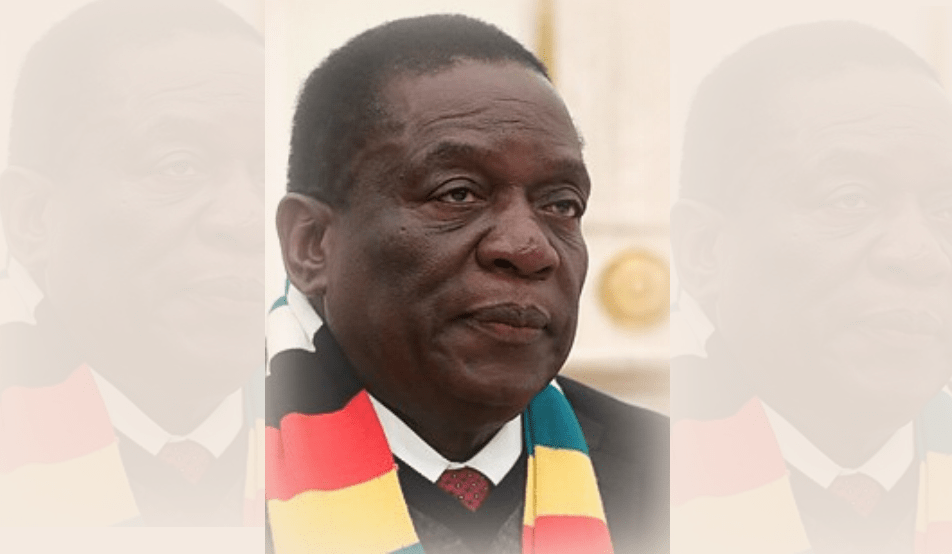
By Kudzai Chimhangwa
It did not come as a surprise when self-imposed secretary general of the Citizens Coalition for Change (CCC) Sengezo Tshabangu, gleefully took to the stand and was sworn in as proportional representation senator in parliament on the 3rd of March this year.
With the support of a judiciary sympathetic to ZANU PF, Tshabangu successfully recalled the majority of the CCC’s parliamentarians much to the joy of Mnangagwa and his minions in the ruling party. Courtesy of Tshabangu’s cruel betrayal of the citizens’ aspirations in the August 2023 National elections, ZANU PF swept a two thirds majority in the National Assembly following the by-elections held on 3 February 2024.
As expected, Tshabangu was acting at Mnangagwa’s behest, who feared Nelson Chamisa’s good transformation. In an interview with local press, Mnangagwa explained how he relishes decimating opposition parties, evidently reflecting that he imposed Tshabangu on the then-President Nelson Chamisa-led CCC. “If my opponents are fighting, I enjoy it. Why would I bother to say I want a strong opposition so that they can challenge me?” he said.
ZANU PF now commands 190 seats out of 280 seats, with 150 directly elected through first past the post, 7 for the youth quota and 33 proportional representation seats for women.
Method to Madness
Recent developments serve as confirmation that Mnangagwa is driven by power consolidation by all means necessary, in order to entrench his rule and imagined popularity with Zimbabweans.
The retention of unbridled power remains Mnangagwa’s objective, in comparison to previous leader Robert Mugabe’s pre-occupation with a confrontational approach against the West.
Preferring to keep a smokescreen of plausible deniability, Mnangagwa has been sending mixed signals about his political schemes.
In an interview with the state media, Mnangagwa betrayed his intentions and capabilities by issuing very broad responses to the question pertaining to his extended tenure as President and constitutional amendments to implement such a move.
Stating that he will obey the constitution, Mnangagwa told The Sunday Mail, ”Once you have come up with your constitution, before you change it, you must comply with what it says…the constitution doesn’t make the country, it’s the country which makes the constitution.”
He went further, “As long as your constitution is serving you well, keep it. If it’s not serving you well, you sit down and amend the provisions that no longer serve the interests of the country.”
This statement implies that an amendment to give effect to his extended stay in office, remains a palpable reality, much like his previous assertions stating the voice of the people is the voice of God.
The youth and women’s wings of the ruling ZANU-PF party have also asked for a constitutional revision to extend his rule beyond two terms.
The slogan “2030 vaMnangagwa vanenge vachipo” translated to “In 2030 President Mnangagwa will still be in office” which was launched at a Zanu-PF youth day celebrations ceremony in Masving in February this year is slowly being filtered into the masses, through coordinated propaganda campaigns.
For instance, in December 2022, ZANU PF women’s league Midlands Provincial chairperson, Tsitsi Zhou said as the women’s league, they will instruct parliament to amend the constitution to extend Mnangagwa’s term of office. At face value, Mnangagwa’s ambitions seem set for an easy take but the writing is on the wall. A restive population yearning for change, constitutional issues, and a sceptical military hinder Mnangagwa’s goal.
Of Constitutional Hurdles and Loopholes
After the military coup of November 2017, Mnangagwa has ruled through a litany of statutory instruments. However, the matter of his term of office remains an elephant in the room.
In terms of Section 91 of Zimbabwe’s 2013 constitution, a President cannot serve more than two terms in office if a term lasts three years or more. Clearly, Mnangagwa cannot benefit from this provision as the incumbent.
Section 91 (2) provides that a person is disqualified for election as President or Vice-President if he or she has already held office as President under this Constitution for two terms, whether continuous or not, and for the purpose of this subsection three or more years’ service is deemed to be a full term.
However, it is important to note that the presidential term can be extended beyond the two terms through activating a constitutional amendment of Section 91(2). This is where Mnangagwa’s obliteration of the opposition and securing a two thirds parliamentary majority became an overarching obsession for him.
Section 328(5) of the Supreme Law states “A Constitutional Bill (which seeks to amend the constitution) must be passed, at its last reading in the National Assembly and the Senate, by the affirmative votes of two-thirds of the membership of each House.”
Furthermore, if the said bill seeks to amend the declaration of rights, it must be undergo authorization through a referendum before it becomes law.
Section 328(7) which reads: “Notwithstanding any other provision of this section, an amendment to a term limit provision, the effect of which is to extend the length of time that a person may hold or occupy any public office, does not apply in relation to any person who held or occupied that office, or an equivalent office, at any time before the amendment.”
In order to achieve the extension of the presidential term, Mnangagwa will have to push for an amendment of section 328(7) before amending Section 91(2).
A public referendum would be needed to allow the President to run for a third term under such a Bill.
Although ZANU PF does not have a majority in the Senate, the presence of partisan chiefs under Mnangagwa’s purview and appointment of charlatans like Tshabangu will make any resolutions passed in the lower house sail through.
The Jacob Mudenda led Parliament’s ambivalent attitude pertaining to deliberations around this contentious issue has not helped matters either. The National Assembly convened on the 4th of April this year and received a petition from Tatsigirwa Musimwa, requesting Parliament to call for a referendum and amend the Constitution and the Electoral Law in order to abolish partisan politics in Zimbabwe. The petition was deemed inadmissible.
Mnanagwa’s government is also reportedly considering a constitutional amendment to remove the direct election of a president, opting instead for the South African system where parliament elects the president. This will make Mnangagwa’s bid for continued stay in office much easier.
A referendum may be used as a ruse of overwhelming citizen involvement and support. If envisaged changes are voted for, this will extend Mnangagwa’s term of office while elections may be suspended.
Amending the constitution allowing Mnangagwa to extend judicial tenure is one of several unconstitutional decisions that have happened in the past. These amendments permitted Mnangagwa to select more ministers outside Parliament and extend Chief Justice Luke Malaba’s term of office, despite reaching retirement stage.
The Military Factor
It remains indisputable that Zimbabwe is a quasi-military state run behind the scenes by commanders of ZANLA, the former militant wing of ZANU PF, pre-1980. As former military wing members of the liberation parties, most senior security officers are ZANU-PF. Factoring in the military-state conflation remains important to understand Zimbabwe’s tough political terrain.
Reports are rife that the military made overtures behind the scenes to block Mnangagwa’s plans to extend his term of office, leading him to publicly state that he had no intention of doing so. However, Mnangagwa has always sought to have firm control over the military apparatus by adjusting the chain of command through deployment of generals deemed a threat to his ambitions, outside the country.
For instance, at a time when term limits are causing heated discussion, former army commander David Sigauke was deployed as ambassador to the DRC in a move viewed by analysts as a strategy to counter military elites who wield influence. Sigauke is infamous for having threatened a coup in 2007 if former dictator Robert Mugabe lost to the popular late MDC leader Morgan Tsvangirai in elections which were slated for 2008. Needless to mention that the 2008 runoff was a bloodbath.
It would seem Mnangagwa is seeking to secure his interests in the post 2028 power matrix by all means possible, including placing his military allies in strategic positions.
After Mnangagwa appointed General Philip Valerio Sibanda as ex officio politburo member at a ZANU-PF conference in Gweru late October last year, opposition leaders, lawyers, and civil society piled pressure on him, citing a constitutional infringement.
The constitution requires security forces members to be non-partisan, national, and professional.
It is imperative for opposition politicians and civil society to remain vigilant and remain alert to Mnangagwa’s unbridled ambitions for power retention, including sneaking in of amendments that would violate the constitution.