By Wezhira Munya
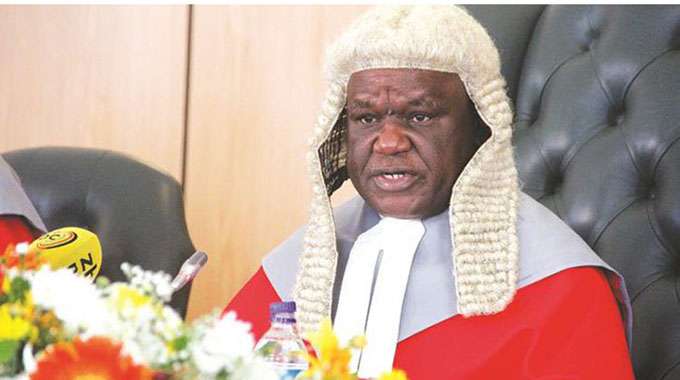
Today, on November 4, 2023, Harare High Court Judge Justice Munamato Mutevedzi dismissed the application for reinstating the Members of Parliament from the Citizens Coalition for Change (CCC), who were recalled by the bogus and self-imposed CCC Secretary General Sengezo Tshabangu.
Tshabangu had recalled 14 CCC Members of Parliament, 9 senators, several Proportional Representatives, and councilors across Zimbabwe.
Tshabangu’s lawyer, Nqobani Sithole, said, “The court application by 14 CCC members and senators has been dismissed.”
The implication of this judgment is that by-elections will be held on December 9, 2023.
Zanu PF failed to secure a two-thirds majority in the harmonized elections on August 23, 2023.
To gain a two-thirds majority, Zanu PF used Tshabangu to recall CCC Members of Parliament.
Many CCC members and general citizens are of the view that Zimbabwe’s courts are captured by Zanu PF.
CCC party spokesperson, Mr. Promise Mkwananzi, gave comments on the judgment on X, stating that:
There is no further doubt about the compromised state of our judiciary. The judiciary had the opportunity to vindicate themselves, to extricate themselves from the jaws of capture, and to prove that they are a credible course to remedy and that even the opposition can turn to them for recourse. They failed. @SADC_News must now act, knowing full well that the supposed domestic remedies in Zimbabwe are incapable of acting independently, impartially, and fairly. The situation in Zimbabwe requires @SADC_News to exercise its steady hands to soft-pedal the imminent crisis that threatens to rapture into and adversely affect the region & the regional body’s credibility. Short of a fresh, free and fair election, @SADC_News must strive to ensure that an amicable political settlement is established with a view to ensuring that Zimbabwe will never again end up with a disputed election, a legitimacy crisis and general stagnation. As you meet today, the onus is upon you, esteemed sirs and ma’ams.
Below is the full judgment
Disposition:
On the background of all the above issues, what stands out is that the first respondent’s letters to the presiding officers of Parliament satisfied all the requirements under s 129(1) (k) of the Constitution. In addition, he attached annexures ‘ST2’, a document addressed to the third respondent which showed that he was designated by the CCC as its officer. There is nothing to rebut that other than the belated and discredited letters of Nelson Chamisa. He went out of his way to prove what he ordinarily was not required to prove. The applicants failed to produce their party constitution or any document which showed that the first respondent could possibly not have held the position he claimed he held. It was simply their word that he wasn’t. That is not enough.
Contrary to counsel’s allegation that the first respondent conceded that he was not a member of the CCC party, his opposing affidavit has claims in innumerable paragraphs saying he is a bona fide member and official of that party with authority to write correspondences of recalls like he did. The onus to prove entitlement to the declaratory orders sought was on the applicants. They did not even begin to discharge it. They have not established their case on a balance of probabilities as required by law and are therefore not entitled to the declaratur which they seek. The other relief was consequential upon the grant of the declaratur. It should also fail.
Costs:
There was a serious argument on the question of costs. The general rule is that costs follow the cause. Put in another way it is that the party who succeeds is usually reimbursed his/her/its costs. The basis of the principle is that the successful party must not be burdened with legal expenses which he/she/it incurred as a result of being forced into groundlessly initiating or defending a legal suit. A court can only depart from that general rule when good cause is shown. In the instant case, the respondents sought costs on a higher scale largely because of the inappropriate language deliberately employed by the applicants in their pleadings. That usually can be a good ground for the court to depart from the general rule. See the case of Crief Investments (Pvt) Ltd and Others v Grand Home Centre (Pvt) Ltd and Others HH 12/18 for grounds which attract costs on higher scales.
In addition, the applicants admitted that they had no cause of action against the second and third respondents. Unfortunately, it was well after those respondents had been needlessly dragged into legal expenses. I doubt that the concessions would assuage their financial bruises. The court cannot, however, ignore the apology tendered by Ms. Ndlovu on behalf of all the applicants and which appeared to have been well received by the respondents. It mitigates whatever turpitude had been occasioned. Although it was largely driven by the applicants’ personal interests, this is a case which borders on the realm of public interest litigation. As a result, I do not see any reason why I should depart from the norm that costs should follow the cause and order payment of costs on the ordinary scale.
In the circumstances, it is ordered:
1. That the application be and is hereby dismissed in its entirety.
2. That the applicants shall pay each of the respondents’ costs jointly and severally, the one paying the others to be absolved.