
By Revesai Mavetera
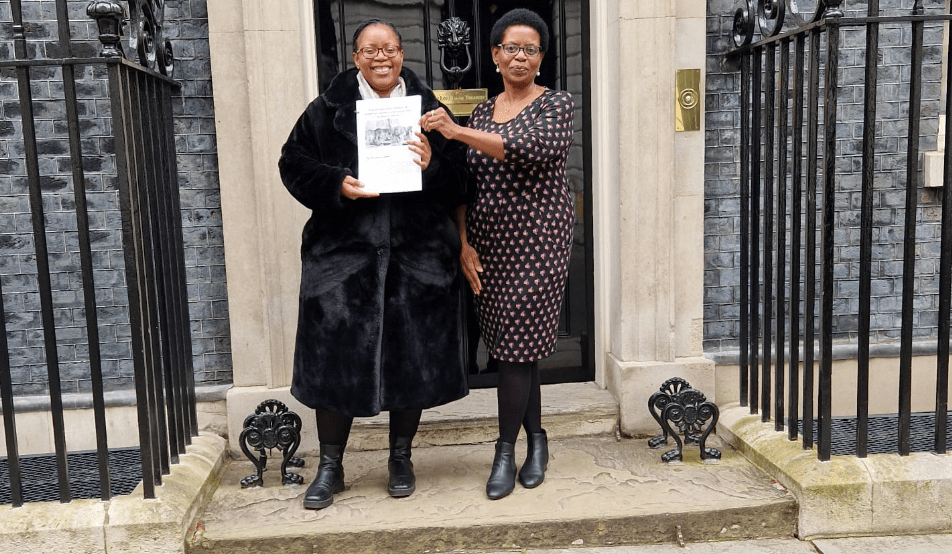
Patricia Chinyoka, the founder of Women of Zimbabwe, alongside other human rights activists based in the UK, recently presented a petition to the Prime Minister, addressing concerns over impending legislation that threatens to restrict immigration policies.
The proposed immigration law prohibits workers migrating to the UK from bringing their dependents, particularly their children. This measure is scheduled to take effect on March 11th. Women of Zimbabwe has been actively supporting close to 200 healthcare workers in their efforts to secure visas for their dependent children to join them in the UK. Notably, these workers, having arrived within the past year, remain unaffected by the impending visa regulations set to be enforced on March 11th. Consequently, even if they haven’t initiated the process for their dependent children to join them, they still retain the option to apply for visas.
Predominantly, the impacted healthcare workers are single Black African mothers from Zimbabwe, Zambia, Ghana, Kenya, Nigeria, South Africa, and Uganda, with a few fathers also stepping forward.
Concerns raised by Women of Zimbabwe primarily revolve around the emotional well-being and safety of these children, some as young as 2.5 years old, left under the care of elderly relatives, friends, neighbors, or nannies.
Critics argue that the Home Office’s stringent policies are systematically preventing young children from reuniting with their mothers in Britain, despite substantial evidence establishing the mothers as primary caregivers. Such policies are decried as discriminatory and inhumane.
The government’s denial of visas to children of migrant single mothers and fathers employed in the NHS or social care sector, citing “no compelling reasons” or disputing sole responsibility, is particularly alarming. Despite submitting all requisite evidence, applicants have been met with responses suggesting their evidence was provided solely to facilitate entry into the UK.
The resultant risk of neglect, abuse, and emotional trauma faced by temporarily separated children is profound. Disturbingly, reports include instances of suicidal thoughts among children and accounts of sexual assault and grooming, with girls as young as 14 bearing the brunt.
These rejections significantly jeopardize the health and well-being of children left behind. Urgent action is imperative to grant visas to dependent children, ensuring their best interests are upheld and mitigating the trauma inflicted by these callous separations.
Tragically, recent reports detail a teenager’s suicide following separation, with others at heightened risk of neglect and abuse.
In solidarity with healthcare workers:
Women of Zimbabwe provide comprehensive support, including guidance on legal avenues and assistance in navigating UK immigration laws.
On Wednesday, March 6th, Women of Zimbabwe submitted a petition to the UK Prime Minister, urging a compassionate and equitable review of visa applications for dependent children of affected healthcare workers.
Additionally, they’ve requested a meeting with the Secretary for the UK Home Department, James Cleverly, who has expressed opposition to healthcare workers and celebrated the impending law change. Women of Zimbabwe have criticized his stance and called for empathy and respect toward workers bridging critical gaps in health and social care sectors.


