
By Albert Mpofu
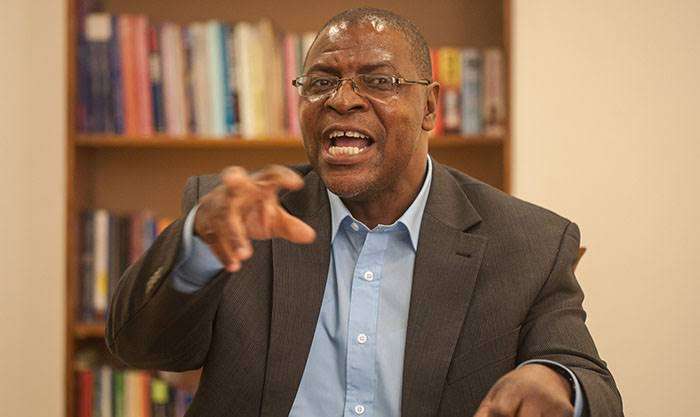
Welshman Ncube, a prominent figure in Zimbabwean politics, is facing mounting criticism for allegedly hijacking established political organizations to advance his own agenda. His actions over the years have not only weakened the opposition but also dragged and delayed the fight for democracy and freedom, prolonging the suffering of ordinary citizens.
Dr. Mafa Sibanda, a veteran politician and director of the Research Institute of Zimbabwe, provided a sharp critique of Ncube’s political record during an interview with Change Radio. Dr. Sibanda referred to Ncube’s conduct as a troubling pattern, stating, “It is most ironic that a negative history repeats itself severely.”
`Follow and Share Change Radio for Real-Time News and Updates on WhatsApp!` https://whatsapp.com/channel/0029Va5kPp2KGGGQkePy4t1q/3698
The roots of these accusations trace back to 2005, during the infamous split of the Movement for Democratic Change (MDC). Ncube, who was initially invited to join the formation of the MDC, is accused of undermining the party to suit his ambitions. Dr. Sibanda remarked, “At a convenient time, on his own judgment, he had to hijack the name MDC,” reflecting how Ncube prioritized personal gain over party unity.
This forced to the creation of MDC-T under Dr. Morgan Tsvangirai, with the “T” being added to differentiate the faction from Ncube’s splinter group. Critics view this as one of Ncube’s earliest acts of political opportunism. Dr. Sibanda explained the situation succinctly, “Hence, Tsvangirai and the majority had to suffix T to be MDC-T for the purposes of elections.”
Critics argue that after Ncube’s takeover of the MDC, he failed to provide the leadership necessary to steer the party forward. Dr. Sibanda noted, *“Ironically, when he hijacked MDC, he had no mental capacity to lead it.” Instead, Ncube had to search for a president, eventually settling on Arthur Mutambara. This inability to lead has been cited as part of a broader pattern of disrupting opposition movements rather than strengthening them.
These actions have contributed to a weakened opposition front, delaying political change in Zimbabwe. By fracturing movements and creating confusion, such behavior has “only resulted in a delayed freedom and elongated persecution of innocent citizens,” Dr. Sibanda lamented.
Fast forward to 2023, similar accusations have been leveled against Ncube, this time regarding his involvement with the Citizens’ Coalition for Change (CCC). Despite not participating in the CCC’s campaign during the general election, Ncube was quick to defend Tshabangu and later positioned himself as the party’s president in the aftermath.
Dr. Sibanda questioned these actions, stating,“Look now what’s happening. He never participated in the 2023 election for the campaign for the CCC, and yet, now he’s claiming to be the president or acting president of CCC.”This mode of operation matches with that which was used in 2005, where after using a third person, Ncube is seen at the top of everything after masterminding the divisions.
In addition, his indirect support for the 2030 Agenda, a policy framework closely aligned with ZANU-PF, has led some to accuse him of enabling the ruling party. Many view these moves as a betrayal of the opposition cause and a deliberate attempt to derail the fight for democratic reform in Zimbabwe. This comes after the CCC party MPs led by Charles Moyo are leading the campaign to support ZANU PF in a move to extend parliamentary, presidential and council terms beyond 2028.
As allegations against Ncube continue to surface, Dr. Sibanda issued a warning to Zimbabweans, urging them to remain alert to such political maneuvers. Sibanda said, “He has found himself a niche in hijacking what he has not worked for.”* This statement point out the fears that Ncube’s actions could further fragment the opposition and undermine efforts to challenge ZANU-PF’s grip on power.
The accusations against Ncube highlight a critical issue in Zimbabwean politics, the fragility of the opposition. As critics point out, when internal conflicts and power struggles take precedence over unity, the result is a weakened resistance to authoritarian rule. This creates opportunities for the ruling party to consolidate power, leaving ordinary citizens to bear the brunt of prolonged economic hardship and political persecution. Should Ncube be blamed or labelled a regime enabler?
Yes, the debate surrounding Ncube’s opposition parties hijacking serves as both a cautionary tale and an eye opener not only to the future leaders but also to the citizens in general because they are the ones who suffer more due to prolonged and unquestioned stay in power of ZANU PF. For Zimbabwe to achieve meaningful democratic change, opposition leaders must prioritize unity, transparency, and the interests of the people above personal ambition.


